









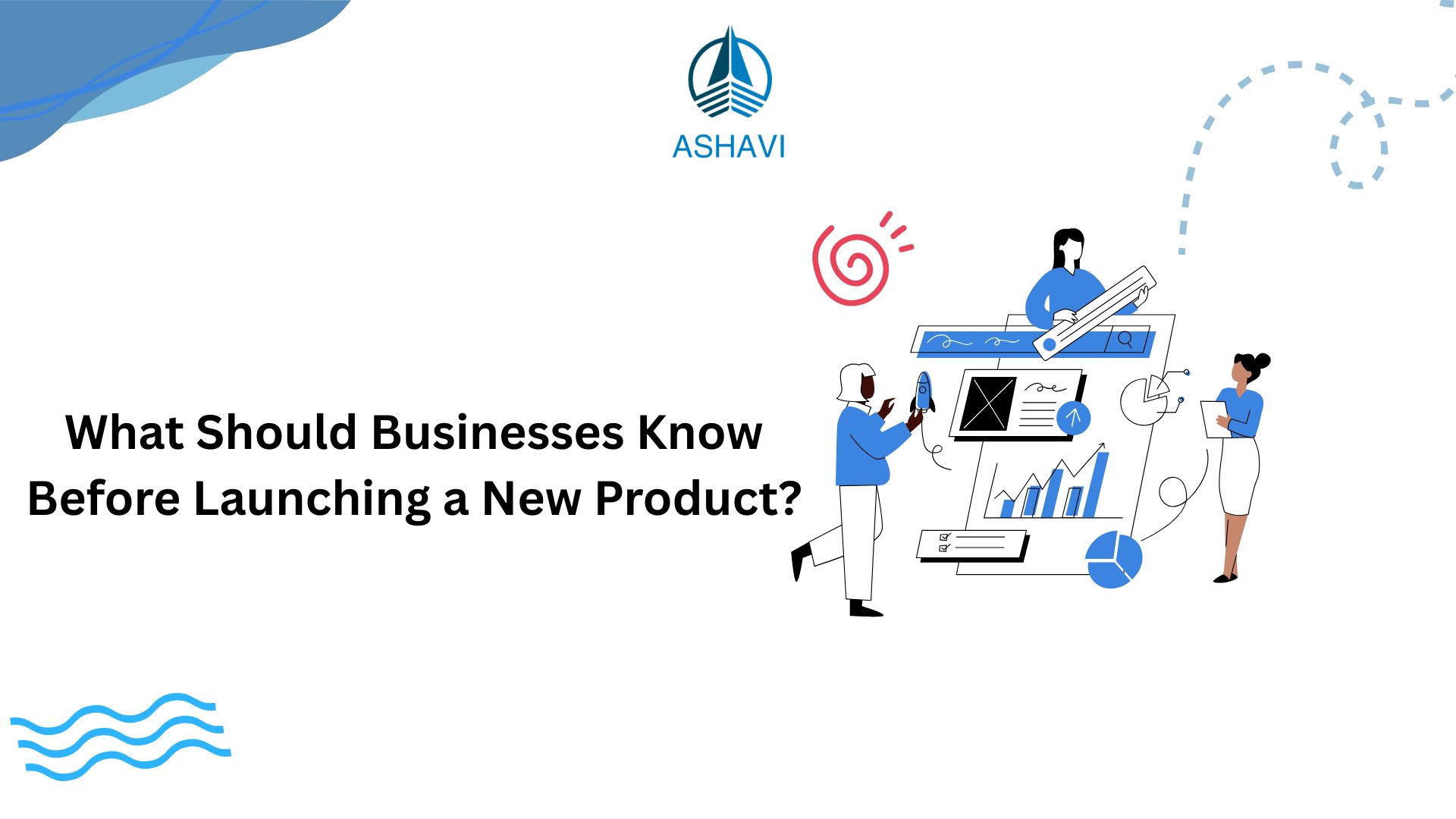
Launching a new product is one of the most exciting moments for any business. It represents innovation, ambition, and the possibility of growth. A successful product launch can help a company enter new markets, attract new customers, strengthen its brand image, and create new revenue streams. However, launching a product without sufficient preparation can also be risky. Many products fail not because the idea is bad, but because the business does not fully understand the market, the customer, the competition, or the timing.
Before introducing a new product to the market, businesses need more than confidence. They need evidence. They need to know whether the product solves a real problem, who will buy it, how much customers are willing to pay, where the product should be sold, and how it should be positioned. In other words, a product launch should not begin with the question “What do we want to sell?” but rather “What does the market truly need?”
The first and most important question every business must answer is: What problem does this product solve?
A product should not exist only because the company has the capability to produce it. It should exist because customers have a need, a frustration, or a desire that is not being fully met. Businesses often make the mistake of falling in love with their own product idea before validating whether customers actually care about it.
For example, a company may develop a high-tech feature because it looks impressive internally. However, if customers do not understand it, do not value it, or are not willing to pay for it, that feature will not drive sales. A product’s value is not determined by how advanced it is, but by how relevant it is to the target customer.
Before launching, businesses should conduct customer research to identify the customer’s pain points, motivations, habits, and expectations. This can include interviews, surveys, focus groups, social listening, product testing, or analysis of customer feedback from existing products. The goal is to move beyond assumptions and understand the customer’s real-world context.
A strong product launch begins with a clear answer: “This product helps this specific group of people solve this specific problem better than existing alternatives.”
No product is for everyone. One of the biggest mistakes businesses make is trying to target too broad an audience. When a company says “our product is suitable for all customers,” it usually means the positioning is not clear enough.
Before launching a new product, businesses need to define their target market as specifically as possible. Who are the customers? What is their age group, income level, lifestyle, location, occupation, and purchasing behavior? What are their values and preferences? Where do they search for information? What influences their buying decisions?
For consumer products, this may involve segmenting customers by demographics, lifestyle, or consumption behavior. For B2B products, it may involve identifying company size, industry, decision-makers, budget cycles, and procurement processes.
A clear target market allows businesses to design better messages, choose the right channels, set appropriate pricing, and develop a more effective sales strategy. It also helps avoid wasting resources on audiences that are unlikely to convert.
The more specific the target customer, the sharper the launch strategy becomes.
A product may solve a real problem, but businesses also need to know whether the opportunity is large enough. Market size matters because it helps determine whether the product can generate meaningful growth.
Before launch, companies should estimate the total addressable market, the serviceable available market, and the realistic share they can capture. This does not mean every business needs a complicated financial model, but it does mean understanding whether the product is entering a growing market, a stable market, or a declining one.
Market growth is especially important. A small but fast-growing market may offer strong opportunities, while a large but saturated market may be difficult to enter. Businesses should look at industry trends, consumer behavior shifts, technology changes, regulatory developments, and economic conditions that may influence demand.
For example, demand for health and wellness products may be driven by aging populations and rising income. Demand for digital tools may be driven by remote work and business automation. Demand for sustainable products may be driven by environmental awareness and stricter regulations.
A new product should be launched with a clear view of not only today’s demand, but also tomorrow’s potential.
No product enters a completely empty market. Even if there are no direct competitors, customers are already solving their problems in some way. They may be using another product, a substitute solution, or simply doing nothing.
Businesses must understand who they are competing against and how their product is different. Competitor analysis should include direct competitors, indirect competitors, substitute products, pricing levels, distribution channels, brand positioning, customer reviews, strengths, and weaknesses.
The key question is not only “Who else is selling something similar?” but also “Why would customers switch to us?”
A product must offer a clear reason to choose it. This reason may be better quality, lower price, stronger convenience, superior design, better customer service, faster delivery, more personalization, or a more trusted brand. Without differentiation, the product may be forced to compete mainly on price, which can reduce profitability.
Businesses should also identify gaps in the market. Are customers complaining about poor service? Are existing products too expensive? Are current solutions too complicated? Are there underserved customer segments? These gaps can become opportunities for positioning.
A successful product launch does not simply enter the market; it enters with a clear competitive advantage.
Before a full launch, businesses should test whether the product truly fits the market. Product-market fit means customers understand the product, value it, and are willing to buy it.
Validation can happen in many ways. Businesses may launch a minimum viable product, conduct pilot tests, offer samples, run pre-orders, test landing pages, or organize limited trials with selected customers. The purpose is to gather evidence before investing heavily in production, marketing, and distribution.
Product testing should focus not only on whether customers like the product, but also on whether they would actually pay for it. Positive feedback is useful, but purchase behavior is more reliable. Many customers may say they are interested, but fewer may be willing to spend money.
Businesses should observe how customers use the product, what they find confusing, what they appreciate most, and what prevents them from purchasing. This feedback can help improve product features, packaging, messaging, pricing, and customer experience before the official launch.
A launch should not be treated as the first test. It should be the result of testing.
Pricing is one of the most critical decisions before launching a new product. Price affects customer perception, profitability, positioning, and competitiveness.
If the price is too high, the product may struggle to gain adoption. If the price is too low, the business may lose margin or damage the perceived value of the product. The right price should reflect customer willingness to pay, production costs, competitor pricing, brand positioning, and long-term business goals.
Businesses should ask several questions before setting the price: How much do customers currently pay for similar solutions? What value does the product provide? Is the product positioned as affordable, premium, or mass-market? Are customers price-sensitive? Will the company use discounts, bundles, subscriptions, or tiered pricing?
For premium products, the business must justify the higher price through quality, design, service, performance, or emotional value. For affordable products, the business must ensure that lower pricing does not compromise profitability.
Pricing is not just a number. It is a strategic message about where the product stands in the market.
A strong product needs a strong message. Before launching, businesses must clearly define how they want customers to perceive the product.
Brand positioning answers the question: What place should this product occupy in the customer’s mind?
The product message should be simple, relevant, and differentiated. It should communicate who the product is for, what problem it solves, and why it is better or more suitable than alternatives. If customers cannot quickly understand the value, they are unlikely to buy.
A common mistake is trying to communicate too many benefits at once. When everything is important, nothing stands out. Businesses should identify the strongest value proposition and build the launch communication around it.
For example, the message may focus on convenience, safety, performance, affordability, luxury, innovation, sustainability, or personalization. The chosen message should match customer priorities, not only internal preferences.
Good positioning makes the product easier to remember, easier to explain, and easier to sell.
Even a good product can fail if customers cannot easily access it. Before launch, businesses need to decide where and how the product will be sold.
For consumer products, this may include e-commerce platforms, company websites, supermarkets, retail stores, pharmacies, social commerce, distributors, or direct sales. For B2B products, it may involve sales teams, partners, resellers, online demos, industry events, or enterprise procurement channels.
The choice of channel should depend on customer behavior. Where do customers usually buy this type of product? Do they need to see it in person? Do they prefer online convenience? Do they require consultation before purchase? Are intermediaries necessary to build trust?
Distribution also affects pricing, margins, inventory planning, customer service, and marketing activities. A product sold through premium retail stores may create a different perception from one sold mainly through discount channels.
Businesses should ensure that the launch channels are aligned with the product positioning and customer journey.
A product launch is not just about making the product available. Customers need to know it exists, understand why it matters, and feel motivated to try it.
Before launch, businesses should prepare a marketing plan that includes target audience, key message, communication channels, content strategy, launch timeline, promotional activities, and performance metrics.
The plan may include social media campaigns, influencer marketing, PR articles, email marketing, digital advertising, product demonstrations, events, webinars, sampling, or partnerships. The right combination depends on the product category and customer behavior.
The launch message should be consistent across channels. Customers should receive the same core value proposition whether they see a social media post, website banner, sales brochure, or product packaging.
Businesses should also prepare educational content, especially if the product is new, technical, or unfamiliar. Customers may need to understand not only what the product is, but also why they need it now.
Marketing should create awareness, build trust, and guide customers toward purchase.
Many product launches fail not because demand is weak, but because operations are not ready. A successful launch requires coordination across production, supply chain, inventory, logistics, sales, customer service, finance, and after-sales support.
Before launch, businesses should ask: Can we produce enough units? Is the supply chain stable? Are quality control processes in place? Can we deliver on time? Are sales teams trained? Is customer support ready? Are return, warranty, and complaint-handling processes clear?
If marketing creates demand but operations cannot fulfill it, customer trust may be damaged. Delayed delivery, stock shortages, poor service, or inconsistent product quality can weaken the launch and harm the brand.
Operational readiness is especially important for products that require installation, technical support, after-sales service, or regular replenishment.
A launch is not only a marketing event. It is a full business operation.
Depending on the product category, businesses may need to comply with specific regulations before launch. This is especially important for healthcare products, food and beverages, cosmetics, pharmaceuticals, financial services, technology platforms, and children’s products.
Compliance may involve product registration, labeling requirements, safety standards, advertising restrictions, data privacy, intellectual property protection, certifications, import regulations, or industry-specific approvals.
Ignoring legal requirements can lead to fines, product recalls, reputational damage, or delayed market entry. Therefore, businesses should involve legal and regulatory teams early in the product development process, not only at the final stage.
Trust is built not only through marketing, but also through responsibility and compliance.
Businesses should define what success looks like before the product is launched. Without clear metrics, it is difficult to evaluate performance objectively.
Success metrics may include sales revenue, number of units sold, conversion rate, customer acquisition cost, repeat purchase rate, market share, website traffic, trial sign-ups, customer satisfaction, product reviews, distribution coverage, or return rate.
The most important metrics should match the launch objective. If the goal is awareness, reach and engagement may matter most. If the goal is revenue, sales and conversion are key. If the goal is market validation, customer feedback and repeat purchase behavior may be more important.
Clear metrics help businesses learn quickly, adjust strategy, and make better decisions after launch.
Before launching a new product, businesses need to understand the market deeply and prepare carefully. A successful launch requires more than a good idea. It requires customer insight, market validation, competitive differentiation, pricing strategy, communication planning, operational readiness, and clear performance measurement.
The most successful businesses do not launch products based on assumptions. They launch based on evidence. They listen to customers, study the market, test their ideas, and refine their strategy before going big.
In today’s competitive environment, customers have more choices than ever. A product must not only be available; it must be relevant, valuable, trusted, and easy to choose.
Before asking “How do we launch this product?”, every business should first ask: “Do we truly understand the customer, the market, and the reason this product deserves to win?”